Is Snif Clean? A Jonquil Beauty Look at the Popular Fragrance Brand
Is Snif clean? Jonquil Beauty reviews Snif’s ingredients, fragrance transparency, clean claims, best scents, and try-before-you-buy model to see whether this popular fragrance brand is truly clean or better described as clean-leaning.
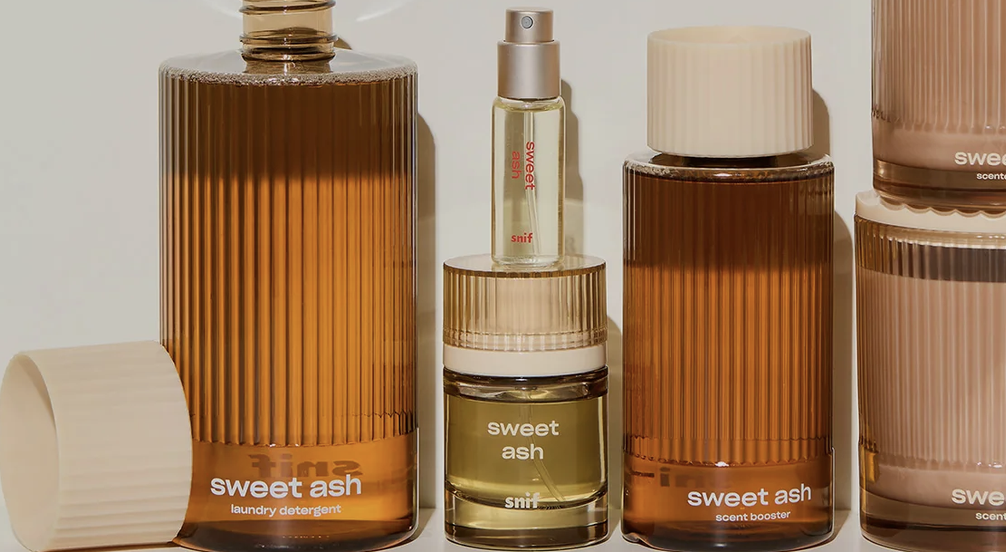
Snif has become one of the most talked-about names in affordable fragrance, known for its try-before-you-buy model, playful gourmand scents, and a “clean” claim that shows up across the brand’s product pages.
But what is actually in the bottle? Where did this brand come from? And does Snif hold up to a real clean-beauty standard?
Here’s what we found.
The Jonquil Beauty Skinny
A quick, honest take before you shop.
Snif is a clean-leaning fragrance brand, not a fully clean, fully natural, or fully transparent one.
The brand formulates without several ingredient categories that ingredient-conscious shoppers often try to avoid, including parabens, phthalates, formaldehyde, preservatives, and synthetic dyes. Its fragrances are also vegan and cruelty-free, and its candle line carries a third-party clean-ingredient certification.
That is a real, meaningful bar — and it puts Snif ahead of many traditional mass-market fragrance options.
But Snif is not an all-natural fragrance brand, and it is not fully transparent in the strictest sense. Like most fragrance brands, Snif lists “Fragrance” as a single ingredient on its bottles, which means the individual aroma materials inside the scent blend are not fully disclosed.
That is standard across the fragrance industry, not a Snif-specific issue. But it is still worth knowing if full ingredient transparency is non-negotiable for you.
Our take: if you want an accessible, fun, clean-leaning fragrance brand with a genuinely useful trial model, Snif is one of the more interesting options in that lane.
If you only want fully disclosed or 100% botanical formulas, you may be better served by niche natural perfumery, where that is the explicit selling point rather than a broader marketing label.
Best For / Skip If
Best for: playful gourmand fragrance lovers, people who want a lower-risk way to try fragrance online, and shoppers who are comfortable with clean-leaning synthetic fragrance.
Skip if: you require full fragrance disclosure, only want 100% botanical perfumes, or know you are very sensitive to fragrance.
The Snif Backstory
Snif was founded in 2020 by Phil Riportella and Bryan Edwards, two friends who did not come from the traditional fragrance industry.
Riportella came from investment banking and fintech startups, while Edwards worked in management consulting. That outsider perspective became part of the brand’s identity: Snif positioned itself as a fragrance company that wanted to make scent feel less intimidating, less gendered, and easier to try at home.
The idea had reportedly been developing before the pandemic, but Snif officially launched in October 2020, at a time when buying personal products online was becoming more normal — and more necessary.
Their answer was a try-before-you-buy model: customers could test fragrances at home before deciding what to keep. For a category as personal and subjective as scent, that was a smart move.
Snif also leaned into genderless fragrance from the beginning, skipping the traditional men’s and women’s divide and rejecting the idea that everyone needs one signature scent. Instead, the brand treats fragrance more like a wardrobe: something you can rotate, layer, and choose based on mood.
Since then, Snif has expanded beyond perfume into scented candles, body mists, laundry products, and limited-edition scent drops. It has also become a larger retail player, with products now sold through major beauty retailers in addition to Snif’s own website.
What’s Actually in Snif Fragrances?
Here is where it gets a little more technical.
A standard Snif eau de toilette lists three main ingredients on the bottle:
Alcohol, Fragrance, Water.
That “Fragrance” ingredient is doing a lot of work.
Snif describes its scent blends as a mix of natural ingredients and safe synthetics. The brand is fairly upfront that it is not an all-natural or all-botanical fragrance line.
A few things worth knowing:
Snif uses both natural and synthetic fragrance materials.
Snif works with outside fragrance houses and named perfumers to create its scents. Like many modern fragrance brands, it uses a combination of natural materials, synthetic aroma molecules, and lab-built accords to create its finished fragrances.
That is not unusual. In modern perfumery, many notes — especially fruits, musks, creamy notes, and abstract “fantasy” accords — are created through a combination of natural and synthetic materials.
Synthetic does not automatically mean “bad.”
This is one of the most misunderstood parts of fragrance.
A synthetic note is not automatically unsafe, and a natural note is not automatically gentle. Many natural essential oils and botanical extracts can be irritating or sensitizing for some people, while some synthetic materials are used because they are more stable, more sustainable, or less reliant on animal-derived or overharvested natural sources.
Snif’s use of synthetic materials is not what makes it clean or not clean. The more important question is: what does the brand exclude, how transparent is it, and how does it define its “clean” claim?
Snif is not a natural or organic fragrance line.
This is important.
Snif fragrances are not positioned as 100% botanical, organic, or fully natural perfumes. They are better understood as clean-leaning modern fragrances made with a mix of natural and synthetic materials.
The “clean” claim is not about using only plant-derived ingredients. It is mostly about what the brand says it leaves out.
Is Snif Clean or Clean-Leaning?
This is the question that matters most if you are shopping with a clean-beauty lens.
Our honest answer: Snif is clean-leaning, not clean in the strictest possible sense.
And that is true of many fragrance brands, not just Snif.
What Snif does well
Snif says its formulas are made without parabens, phthalates, formaldehyde, preservatives, and synthetic dyes. These are ingredient categories many clean-beauty retailers and ingredient-conscious shoppers commonly flag or avoid.
The brand also says its fragrances and candles are vegan and cruelty-free.
Snif’s candle line carries a third-party clean-ingredient certification, which adds another layer of support for that part of the product range. Those types of certifications typically rely on a published “made without” list, rather than promising that a product is fully natural or fully transparent.
That matters. A “made without” standard can still be useful, even if it is not the same as full formula disclosure.
Where it gets murkier
“Clean fragrance” does not have one single legal definition in the United States.
That means brands, retailers, and beauty publishers often create their own standards to help shoppers interpret the term. Some standards focus on excluded ingredients. Some focus on sustainability. Some focus on allergens. Some focus on natural origin. Some are more transparent than others.
This is exactly why “clean” can get confusing.
A brand can truthfully say it is “clean” according to its own ingredient standard while still using synthetic fragrance materials and still listing “Fragrance” as a single ingredient.
That is not necessarily deceptive, but it does mean shoppers need to understand what the word is doing.
The fragrance transparency issue
The biggest limitation with Snif is the same limitation we see across most of the fragrance industry: the word “Fragrance.”
When “Fragrance” appears as a single ingredient, the individual aroma materials inside that blend are not fully listed on the bottle. Fragrance formulas are generally treated as proprietary, which means the brand does not have to disclose every individual aroma chemical used to create the scent.
Again, this is not unique to Snif. It is industry standard.
But if your personal clean-beauty standard requires full ingredient disclosure, Snif will not fully meet that bar.
Our take
Snif clears a meaningful clean-leaning bar: no parabens, no phthalates, no formaldehyde, no synthetic dyes, vegan, cruelty-free, and third-party clean-ingredient certification on its candle line.
That puts it ahead of many traditional mass-market fragrance options.
But “clean” fragrance, in this case, still means “made without certain flagged ingredients.” It does not mean fully disclosed, fully natural, or 100% botanical.
We would call Snif a genuinely better-than-average clean-leaning fragrance option — not a strict clean or natural perfume brand.
What Makes Snif Stand Out
There are a lot of fragrance brands using the word “clean” right now, but Snif does have a few things that make it feel different.
The try-before-you-buy model is genuinely useful.
Fragrance is one of the hardest beauty categories to buy online. A scent can sound perfect in the description and still feel completely wrong on your skin.
Snif’s trial model helps reduce that risk. Instead of asking you to blindly commit to a bottle, the brand lets you test scents at home before deciding what to keep.
For fragrance, that is not just a gimmick. It is actually helpful.
It makes fragrance feel fun instead of intimidating.
Traditional fragrance language can feel very serious, expensive, and hard to decode. Snif takes a more playful approach.
The brand is known for scent concepts inspired by things like pastries, milk and cereal, cola floats, and other nostalgic or food-adjacent ideas. That makes the line feel less like a formal perfume counter and more like a fragrance playground.
Not every scent will be for everyone, but the concept is easy to understand — and that is part of the appeal.
The brand is genderless by design.
Every Snif fragrance is marketed without a men’s or women’s label. That is increasingly common in niche fragrance, but still refreshing at Snif’s price point and retail scale.
Instead of telling you who a scent is “for,” Snif focuses more on the mood, notes, and overall experience.
The Secret Menu keeps things interesting.
Snif’s Secret Menu is where the brand gets especially experimental. These limited or unconventional scent drops often play with food, objects, and unexpected concepts that feel more like cultural moments than classic perfumes.
The price point is accessible.
Snif sits below many prestige and niche fragrances while still working with professional perfumers and modern fragrance-development techniques.
That makes it appealing if you want something more interesting than a basic mass-market perfume but are not ready to spend niche-fragrance prices.
Snif’s Top Fragrances to Know
Snif has a growing fragrance lineup, but these are three of the scents most often associated with the brand.
Crumb Couture
Crumb Couture is one of Snif’s most talked-about fragrances and arguably the scent that pushed the brand deeper into gourmand-fragrance territory.
It is a croissant-inspired fragrance with a buttery pastry feel, softened by jammy and floral notes. It is playful, cozy, and very much part of the modern gourmand trend.
This is not a subtle “your skin but better” scent. It is more of a conversation-starter fragrance. Some people find it delicious and oddly addictive; others may find it too bakery-like or sweet.
Best for: gourmand lovers, pastry-scent fans, and anyone who wants a fragrance that feels cozy, playful, and a little unexpected.
Sweet Ash
Sweet Ash is one of Snif’s signature scents and a good place to start if you want something more woody, warm, and unisex.
It has notes like juniper, bergamot, fir balsam, white moss, tonka, vanilla bean, and patchouli. The overall effect is earthy, slightly sweet, and more grounded than some of Snif’s louder gourmand scents.
This is probably one of the safer entry points into the brand because it feels wearable without being boring.
Best for: people who like woody, slightly sweet, unisex fragrances and want something that feels polished but not too serious.
Tart Deco
Tart Deco is a fruity-floral scent built around black cherry and raspberry, with rose, jasmine, mimosa, birchwood, vetiver, and vanilla.
It is brighter and juicier than Sweet Ash, but more traditionally perfume-like than some of Snif’s food-inspired scents. If you like fruity florals with a little depth, this may be one of the easier Snif scents to wear day to day.
Best for: fruity-floral lovers, cherry-fragrance fans, and shoppers who want something playful but still wearable.
Final Thoughts: Is Snif Worth Trying?
Snif earns real credit for what it excludes and for a business model that genuinely makes fragrance easier to buy online.
It is not a natural fragrance brand. It is not a fully transparent fragrance brand. And no amount of clean marketing changes the fact that “Fragrance” is still listed as a single ingredient.
But that does not mean Snif has no value from an ingredient-conscious perspective.
If you are looking for an accessible, clean-leaning fragrance brand with vegan and cruelty-free formulas, no parabens, no phthalates, no formaldehyde, no synthetic dyes, and a smart at-home trial model, Snif is one of the better options in the mainstream clean-fragrance space.
If full disclosure or 100% botanical formulation is your personal standard, you may want to look toward niche natural perfumery instead.
Our final take: Snif is not perfect, but it is interesting, fun, and better-than-average for shoppers who want a more ingredient-conscious approach to fragrance without giving up playful, modern scent concepts.
About the Author: I’m Lissa, a volunteer researcher with Jonquil Beauty and a clean beauty advocate. After my brain tumor diagnosis, I became deeply interested in ingredient research, product formulation, and choosing products that felt gentler and more intentional for me. Now I test products, usually for at least 30 days, research ingredients obsessively, and share honest reviews to help you find safer beauty no matter your budget. No chemistry degree required.