Why Your Skin Is Always Reacting and How to Finally Fix Sensitive Skin
Why your skin is always reacting and how to fix sensitive skin with a simple routine, barrier repair tips, and trigger insights.

Written by guest author Sara from MeSensitive --
If you’ve ever stood in the skincare aisle wondering whether yet another “gentle” product will leave your face burning by morning, this is for you.
Sensitive skin is one of the most common and most misunderstood skin concerns out there. It is more than occasional redness or skin that seems a little picky about products. It is ongoing reactivity that can affect how your skin looks, feels, and responds every single day.
The frustrating part is that much of the advice out there either oversimplifies the issue or sends you down an expensive rabbit hole of products that do not work.
What actually helps is understanding why your skin reacts the way it does and building a routine from there.
This guide breaks it all down: the causes of sensitive skin, common symptoms, triggers, and a practical sensitive skin routine that gives your skin a real chance to settle.
The information provided in this article is for general informational purposes only and does not constitute medical advice.
What Sensitive Skin Actually Is and Why It Happens

Sensitive skin is not just occasional redness after trying a new product.
It is the burning after cleansing, the itchy patches that appear out of nowhere, and the stinging that follows applying a moisturiser labelled “soothing.” If that sounds familiar, you are not imagining it, and you are not alone.
At the root of it all is your skin barrier.
Think of your skin barrier like a brick wall, with lipids acting as the mortar that holds everything together. When those lipids break down, moisture escapes more easily and irritants get in.
The result is skin that reacts to almost everything.
Is Sensitive Skin Genetic or Environmental?
The answer is both.
Some people are born with a more reactive immune system that treats otherwise harmless ingredients like threats. If your parents had sensitive skin, there is a chance you inherited that tendency.
But genetics are only part of the story. Pollution, UV exposure, cold wind, and dry indoor heating can all weaken your skin barrier over time.
Then there is product overload: layering acids, retinol, vitamin C, and exfoliants without giving your skin time to recover.
Add stress and hormonal changes into the mix, and you have the perfect conditions for chronic skin reactivity.
The good news is that once you understand the cause, you can take real steps to support your skin barrier and calm sensitive skin.
How Sensitive Skin Shows Up in Different Areas
Sensitive skin does not always look the same everywhere on the body. It can show up in different ways, and each area often needs a slightly different approach.
Face: Redness, Tightness, and Burning
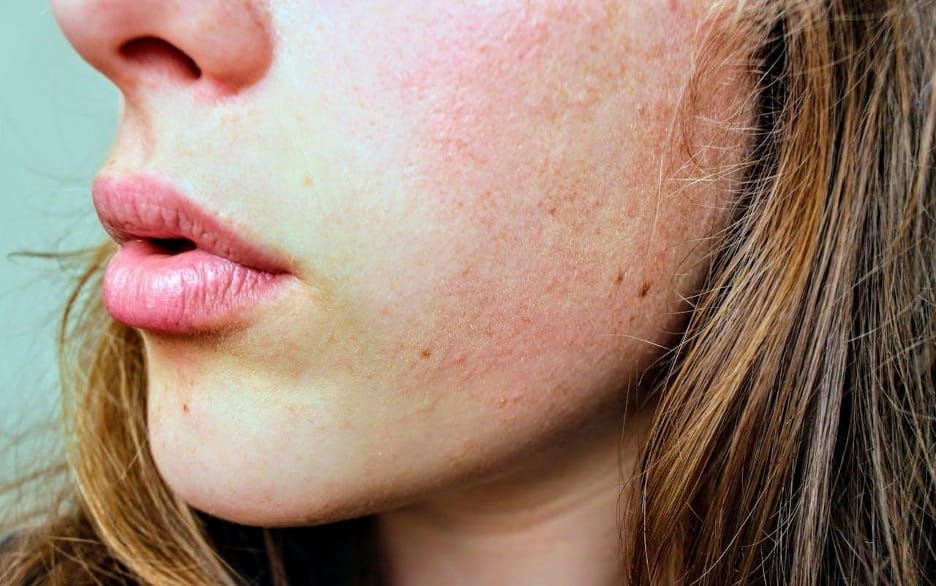
Your face gets the most daily exposure, so it is usually where sensitivity shows up first.
Flushing from minor triggers, skin that feels tight after cleansing, or inflamed bumps that are not quite acne are all classic signs that your barrier needs support.
Many products marketed as “gentle” still contain fragrance or high-strength actives that can trigger irritation.
A simpler approach often works best. Swap harsh cleansers for something gentler like the Neutrogena Original Fragrance-Free Facial Bar or a barrier-supporting option like Curél Intensive Moisture Facial Cream.
Eyes: Thin, Delicate, and Easily Irritated
The skin around your eyes is thinner than the rest of your face, which means it often reacts faster.
Mascara that makes your eyes water, eyeshadow that leaves you itchy by midday, or makeup removers that sting — these are all signs of eye area sensitivity.
Look for ophthalmologist-tested and hypoallergenic formulas. Micellar water or oil-free removers designed for sensitive eyes are a far better choice than products requiring heavy rubbing. Trusted recommendations include Optase Life Sensitive Eye Makeup Remover or Clinique Take The Day Off Liquid Makeup Remover, which are designed for sensitive eyes.
Avoid waterproof formulas where possible, since the removal process alone can cause significant irritation.
Body and Hands: Dry, Reactive Areas
Sensitive skin on the body often shows up as dry, itchy patches, particularly on the elbows, knees, and hands.
Hot showers, harsh body washes, and even your laundry detergent can all play a role.
Switch to a gentle, fragrance-free, sulfate-free body wash, such as BYOMA Sensitive Skin Body Wash, and moisturise right after a shower.
Lips: When Lip Balm Makes Things Worse
If your lips stay chapped no matter how often you apply balm, the balm itself may be part of the problem.
Fragrance, menthol, and certain waxes can trigger burning, peeling, or allergic contact dermatitis. The more you apply, the worse the cycle can become.
Look for fragrance-free, lanolin-free lip balms with minimal ingredients. Ceramides and shea butter are often helpful for dry, sensitive lips.
How to Identify Sensitive Skin Triggers
Understanding what sets your skin off is one of the most useful things you can do.
- Use a Simple Self-Assessment
Ask yourself:
Does your face burn after cleansing?
Do you flush easily?
Do products sting before you have even finished applying them?
If several of these are true, including burning, stinging, itching, frequent redness, or reactions to multiple products, your skin barrier may be compromised.
- Patch Test New Products at Home
Before applying any new product to your face, test it on your inner forearm for 48 to 72 hours.
If redness, itching, or bumps appear, that product may not be a good fit for your skin.
It's a small step that saves you from full-face flare-ups and wasted money.
Dr Pratsou, a skilled Consultant Dermatologist, has helpful guidance on patch testing if you want to do it properly.
- Keep a Skin Diary
This may feel a little tedious, but it can be incredibly helpful.
Write down the products you use, foods you eat, the weather, stress levels, and how your skin responds within 24 hours.
Patterns often start to appear more quickly than you would think.
Common triggers include fragrance, sulfates, essential oils, denatured alcohol, and high-percentage actives. Once you know your personal triggers, you can avoid them more consistently.
If your skin stays persistently inflamed despite making changes, it may be time to see a dermatologist. Conditions such as rosacea, eczema, and allergic contact dermatitis often need targeted treatment that over-the-counter skincare cannot provide.
Building a Sensitive Skin Routine That Actually Works
When your skin is reactive, the goal is not to do more. It is to do less, more consistently.

Ingredients to Look For
Barrier repair starts with the right ingredients.
Ceramides help fill gaps in your skin barrier, while niacinamide can help reduce visible inflammation and improve resilience over time. Together, they make a strong foundation for a sensitive skin routine.
Other soothing ingredients to look for include:
- colloidal oatmeal
- centella asiatica (cica)
- allantoin
- hyaluronic acid
- glycerin
- squalane
These ingredients can help calm skin and support hydration without overwhelming a compromised barrier.
Ingredients to Avoid
Fragrance is one of the most common triggers for sensitive skin, and it can even show up in products labelled “unscented.”
It is also wise to be cautious with denatured alcohol, physical scrubs, essential oils, and high-strength acids until your barrier feels stronger.
Read ingredient lists carefully. This really matters.
Marketing language such as “gentle,” “natural,” or “for sensitive skin” is not a guarantee that a product will not irritate you.
Tools like the Environmental Working Group's Skin Deep database can be a useful starting point for checking ingredients.
Keep Your Routine Simple
Fewer products mean fewer opportunities for irritation.
A basic routine for sensitive skin can look like this:
- a fragrance-free gentle cleanser
- a barrier-supporting moisturiser with ceramides and niacinamide
- a mineral SPF with zinc oxide or titanium dioxide every morning
Introduce only one new product at a time, and wait at least two weeks before adding another. That way, you can tell what is helping and what is not.
Can Makeup Trigger Sensitive Skin?
Yes, and it is often overlooked.
Foundation, concealer, setting spray, and even makeup brushes can carry irritants that quietly inflame your skin throughout the day.
That is why choosing the best makeup for sensitive skin matters just as much as choosing the right skincare.
If you are dealing with frequent flare-ups, it may be worth taking a closer look at what is in your complexion products and how often you are cleaning your tools.
Lifestyle Changes That Can Help Calm Sensitive Skin
Your skincare routine is part of the picture, but your everyday habits matter too.
Protect Against Environmental Stressors
Hot showers can strip the skin barrier quickly, so switch to lukewarm water and pat skin dry instead of rubbing.
A humidifier can also help during winter or in air-conditioned spaces where dry air makes irritation worse.
Daily SPF matters too. Mineral sunscreens with zinc oxide or titanium dioxide sit on top of the skin rather than absorbing into it, which makes them a better option for many people with sensitive skin.
Apply SPF every morning, and reapply every two hours when you are outdoors.
Support Skin From the Inside Out

What you eat and how you manage stress can affect inflammation levels throughout the body, including the skin.
Foods rich in omega-3 fatty acids, such as salmon, walnuts, and flaxseeds, may help support skin health. Antioxidant-rich foods like berries and leafy greens can help too. Harvard Health has a helpful overview of anti-inflammatory eating if you want to learn more.
Chronic stress raises cortisol levels, which can weaken the skin barrier and increase reactivity over time.
Prioritising sleep, regular movement, and stress management is not just good for your overall wellbeing. It can also be part of caring for sensitive skin.
The Bottom Line on Sensitive Skin
Sensitive skin can feel exhausting, but it is manageable once you understand what is driving it.
Strengthen your skin barrier, simplify your routine, identify your personal triggers, and protect your skin from environmental stressors.
Real improvement usually comes from consistency, not complexity.
Start with one change today: swap a harsh cleanser, add a ceramide moisturiser, or begin a skin diary.
Small, steady steps can make a real difference. Over time, your skin can start to feel like your skin again, not your biggest daily battle.
I hope this guide helps you feel more supported and more confident as you care for sensitive skin.
✍️ About the Author
Sara is the voice behind MeSensitive, where she combines her love for writing with her passion for all things sensitive skin. As a lifelong bookworm and former sensitive skin sufferer, she’s obsessed with sharing tips, insights, and solutions that actually work.